
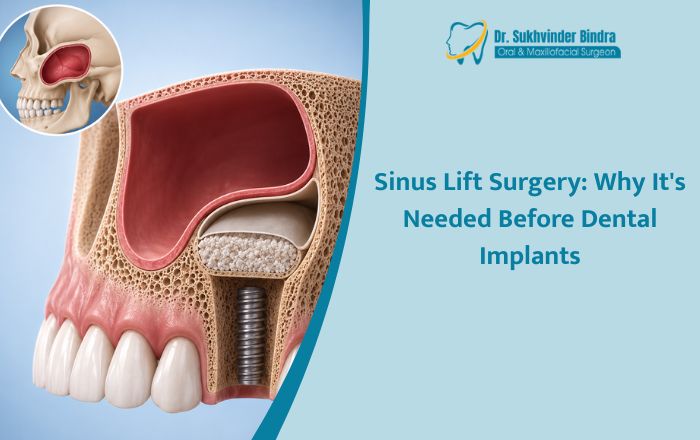
Losing a tooth in the upper back of your mouth can feel like a small problem at first. Then you visit a dentist for an implant, and you’re told you may need a sinus lift first. If that has left you confused or a little worried, you’re not alone. Many patients in Secunderabad hear about this procedure for the first time only when they’re already planning their implants. What Is a Sinus Lift Surgery? A sinus lift is a minor surgical procedure that adds bone to your upper jaw in the area of your molars and premolars. Your maxillary sinuses sit just above these teeth. When there isn’t enough bone height between the jaw and the sinus, the surgeon gently lifts the sinus membrane upward and places bone grafting material in the space created. Think of it as building a solid foundation before putting up a house. Dental implants need enough healthy bone to anchor into. A sinus lift creates that support so the implant can hold firmly for years. The procedure is also called sinus augmentation or a sinus graft. The names differ, but the goal is the same: give your implant the bone it needs to succeed. Why Is a Sinus Lift Needed Before Dental Implants? The upper back jaw is naturally one of the trickiest places to place an implant. There’s often less bone there to begin with, and the sinus cavity is close by. When a tooth is lost in this region, the bone underneath starts to shrink over time. The longer the gap stays empty, the more bone you tend to lose. If the remaining bone is too thin or too short, an implant simply won’t have anything solid to grip. Placing one anyway risks it loosening, failing, or even poking into the sinus. A sinus lift rebuilds that lost height so the implant sits exactly where it should. In short, this surgery turns an unsuitable site into a strong, implant-ready one. Who Needs a Sinus Lift? Not every implant patient needs this step. It’s usually recommended when one or more of these apply: You’ve been missing upper back teeth for a long time and the bone has shrunk. Gum disease or infection has damaged the jawbone in that region. Your sinuses are naturally large or sit lower than average, leaving little bone below them. A previous tooth extraction led to significant bone loss. Scans show your bone height isn’t enough to support a standard implant. The only way to know for sure is a proper evaluation. A 3D scan, usually a CBCT, gives a clear picture of your bone and sinus position. Dr. Bindra reviews this carefully before recommending anything, so you’re never advised to undergo a procedure you don’t genuinely need. How Is the Sinus Lift Procedure Done? The procedure is done under local anaesthesia, often with sedation for comfort, and most patients are surprised by how manageable it feels. Here’s a simple walk-through of what happens. First, the surgeon makes a small opening to access the bone near the sinus. The delicate sinus membrane is then lifted upward with great care to create space. Next, bone graft material is placed into that space to build up the height. The area is closed with stitches, and healing begins. Over the following months, the graft fuses with your natural bone and becomes solid enough to hold an implant. In some cases, if enough bone is already present, the implant can be placed during the same appointment. More often, it’s placed later once the new bone has matured. Every jaw is different, which is why an experienced surgeon tailors the approach to your anatomy rather than following a one-size-fits-all method. Recovery After Sinus Lift Surgery Recovery is usually smoother than most people expect. You may notice some swelling, mild discomfort, or slight bleeding for a few days, all of which are normal and settle down quickly. A few simple habits help healing along: Avoid blowing your nose forcefully for a couple of weeks. Sneeze with your mouth open to reduce sinus pressure. Skip strenuous exercise for a short while. Take prescribed medication and eat soft foods early on. Attend your follow-up visits so healing can be monitored. Most patients return to their regular routine within a day or two. The bone graft itself, however, needs several months to fully integrate before the implant stage. Patience here pays off with an implant that lasts. Frequently Asked Questions 1. Is sinus lift surgery painful? No, the procedure is done under anaesthesia, so you won’t feel pain during it. Afterward, most patients report only mild discomfort or swelling that settles within a few days with basic care and prescribed medication. 2. How long does it take to recover from a sinus lift? The initial recovery takes just a few days, and many people resume normal activity within 24 to 48 hours. The bone graft itself needs several months to fully heal before an implant can be placed. 3. Can implants be placed on the same day as a sinus lift? Sometimes, yes. If you already have enough existing bone, the implant may go in during the same visit. If more bone is needed, the implant is usually placed a few months later once the graft has matured. 4. Is a sinus lift a safe procedure? It’s a routine and safe surgery when performed by an experienced oral surgeon. Careful planning with a 3D scan and precise technique keep the risk of complications low. Book Your Consultation with Dr. Sukhvinder Bindra Today Dr. Sukhvinder Bindra, Oral Surgeon in Secunderabad, specializes in advanced oral surgical procedures, including sinus lift surgery, bone grafting, and dental implant preparation. With extensive experience and a patient-first approach, Dr. Bindra ensures safe, effective, and comfortable treatment tailored to your needs.
What Is Bone Grafting Before Dental Implants?
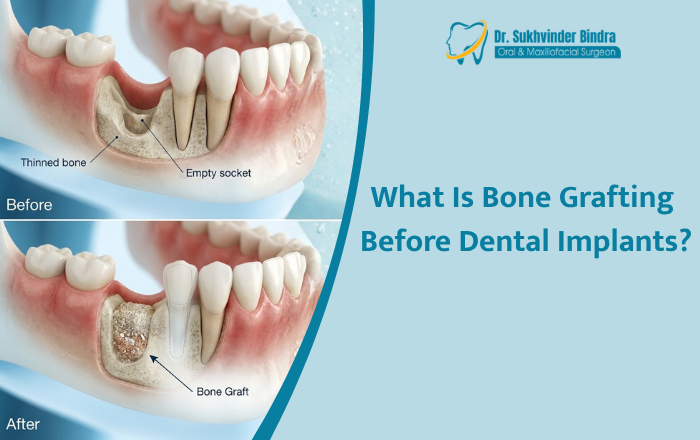
You’ve decided on dental implants to replace a missing tooth, feeling confident you’re on the path to a complete, functional smile again. Then your dentist mentions something unexpected: you may need a bone graft first. If that phrase caught you off guard, you’re not alone bone grafting is one of the most misunderstood steps in the implant process, even though it plays a critical role in long-term success. The truth is, a dental implant is only as strong as the bone that supports it. When there isn’t enough healthy jawbone to anchor an implant securely, bone grafting steps in to rebuild that foundation. This guide explains what bone grafting actually involves, why it’s sometimes necessary, and what you can expect if your dentist recommends it before implant placement. Why Bone Support Matters for Dental Implants Dental implants work differently from traditional dentures or bridges. Instead of resting on top of the gums, an implant is a titanium post surgically placed directly into the jawbone, mimicking the root of a natural tooth. Over time, the bone fuses with the implant in a process called osseointegration, creating a stable, long-term foundation for a replacement tooth. For this fusion to happen successfully, there needs to be enough bone density and volume at the implant site. Without adequate bone, an implant can fail to integrate properly, become loose, or fail altogether. Why Jawbone Loss Happens Several situations can lead to insufficient bone at a potential implant site: – Tooth Loss and Time When a tooth is lost, the jawbone in that area no longer receives the stimulation it needs from chewing forces, and it naturally begins to shrink over time. The longer a tooth remains missing, the more significant this bone loss can become. – Periodontal (Gum) Disease Advanced gum disease is one of the leading causes of bone loss around teeth, as the infection breaks down both gum tissue and the underlying bone structure. – Trauma or Injury Facial injuries or accidents that damage the jaw can result in bone loss or irregular bone structure, making implant placement more complex. – Long-Term Denture Wear Wearing dentures for many years, particularly ones that don’t fit properly, can accelerate bone resorption in the jaw due to a lack of natural stimulation. – Infections or Cysts Dental infections, abscesses, or cysts can damage surrounding bone, sometimes requiring reconstruction before an implant can be placed. – What Is Bone Grafting? Bone grafting is a surgical procedure that adds volume and density to the jaw in areas where bone has been lost or is naturally insufficient. The grafting material acts as a scaffold, encouraging your body to grow new, healthy bone in that space over the following months. – Types of Bone Graft Material Autograft – Bone taken from another area of your own body, often considered the gold standard due to excellent compatibility. Allograft – Processed bone sourced from a human donor, screened and prepared for safe use. Xenograft – Bone material derived from an animal source, commonly bovine, processed to be biocompatible. Synthetic graft material – Lab-created bone substitutes designed to encourage natural bone growth. Your oral surgeon will determine which type is most appropriate based on the size of the graft needed, your health history, and the location of the implant site. Types of Bone Grafting Procedures – Socket Preservation Performed immediately after a tooth extraction, this procedure fills the empty socket with grafting material to prevent bone loss and maintain the site for a future implant. – Ridge Augmentation Used when the jawbone ridge has become too narrow or short to support an implant, this technique rebuilds the width and height needed for stable implant placement. – Sinus Lift For implants placed in the upper back jaw, where bone is often thinner and closer to the sinus cavity, a sinus lift adds bone beneath the sinus floor to create adequate depth for implant placement. – Block Bone Grafting This method uses a solid block of bone, rather than granular material, to rebuild larger areas of significant bone loss. What to Expect During Bone Grafting Treatment The procedure is typically performed under local anesthesia or sedation, depending on the complexity of the case. Grafting material is placed at the treatment site and, in many cases, covered with a protective membrane to support healing. Recovery time varies depending on the extent of the graft, but most patients need anywhere from three to nine months for the new bone to fully integrate and become strong enough to support an implant. During this healing period, your surgeon will monitor progress through follow-up visits and imaging. While some minor swelling or discomfort is normal in the days following surgery, most patients find recovery manageable with prescribed care instructions and over-the-counter pain relief. Is Bone Grafting Always Necessary? Not every implant patient needs bone grafting. Your oral surgeon will evaluate your jawbone through imaging, such as a CT scan, to determine whether you have sufficient bone volume and density for a stable implant. If your bone levels are adequate, you may be able to proceed directly to implant placement. Benefits of Bone Grafting Before Implants Creates a stable, long-lasting foundation for implant success Preserves natural facial structure by preventing further bone loss Improves the likelihood of successful osseointegration Allows for implant placement in cases that would otherwise not be possible Supports better long-term function and appearance Conclusion Bone grafting might sound like an extra hurdle on your path to a restored smile, but it’s really a safeguard — one that ensures your dental implant has the strong, healthy foundation it needs to last for years to come. With modern techniques and experienced surgical care, the process is safe, predictable, and a well-established part of successful implant dentistry. If you’re missing sufficient bone, don’t view grafting as a setback; think of it as the groundwork for a lasting result. Frequently Asked Questions Q1.: Is bone grafting painful? A: Most patients experience mild discomfort or swelling for a few days after
