
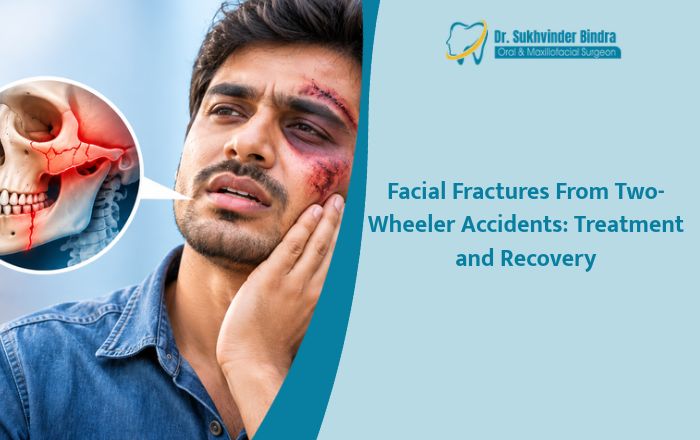
A fall from a two-wheeler can happen in a moment, and the face is often one of the first places to hit the road. Cheekbones, jaws, the nose and the bones around the eyes can all be injured, even when a helmet is worn. This guide explains facial fractures from two-wheeler accidents, the signs that need urgent care, how treatment is planned and what recovery usually involves. A facial injury after an accident needs emergency assessment. Head, neck and airway problems come first. This article is general information and does not replace an examination. Why Do Two-Wheeler Accidents Cause Facial Fractures? Riders and pillion passengers have no protective frame around them. In a collision or skid, the face may strike the road, a vehicle or a hard surface. Risk goes up when: No helmet is worn, or the helmet is loose, not strapped or of poor quality An open-face helmet is used, which leaves the jaw and cheeks exposed The rider is thrown forward and lands on the chin or the front of the face Speed is high, or the road is poor, wet or poorly lit A helmet that fits well, carries a recognised quality mark and is fastened with the chin strap lowers the chance and severity of head and facial injury, although it cannot prevent all injuries. Full-face helmets cover more of the face than open-face designs. Types of Facial Fractures Different bones can break alone or in combination: Mandible (lower jaw) fractures: common after a blow to the chin. They can change the bite and cause pain on opening the mouth. Maxilla (upper jaw) fractures: often involve the midface and may affect the bite, the nose and the eye sockets. Zygomatic (cheekbone) fractures: may flatten the cheek and cause numbness of the cheek or upper lip. Orbital (eye socket) fractures: may cause double vision or a sunken look of the eye. Nasal bone fractures: lead to swelling, a bent nose or breathing difficulty. Dentoalveolar injuries: broken, loosened or knocked-out teeth and fractures of the tooth-bearing bone. You can read about the general pattern of these injuries on our maxillofacial fractures page. Signs of a Facial Fracture Seek urgent evaluation if you or someone else has had a facial injury and notices: Swelling, bruising or bleeding of the face, mouth or nose Pain when opening or closing the mouth, or teeth that no longer meet normally Numbness of the lip, chin, cheek or teeth Double vision, difficulty moving the eye or a change in the eye’s position A visible step, dent or uneven contour on the cheek, jaw or forehead Blood in the mouth, loose teeth or trouble speaking or swallowing Clear fluid from the nose or ear, vomiting, severe headache, drowsiness or confusion, which may point to a head injury hat to do immediately after the accident Call for emergency help and move the person to a hospital with an emergency department. Do not move the neck more than necessary. Neck injuries can occur along with facial injuries. Help a conscious person sit upright and lean forward so blood and saliva drain out, unless a neck or spine injury is suspected. Press a clean cloth gently over bleeding areas. Do not press on a suspected fracture. Keep any knocked-out tooth in milk or saline and bring it along. Do not scrub it. Do not give food or drink until a doctor has examined the person. How Are Facial Fractures Diagnosed? The first priority is to check the airway, breathing, circulation and head and neck injury. Once the person is stable, a surgeon examines the face and bite and checks sensation and eye movement. A CT scan of the face, often with 3D reconstruction, shows the fracture pattern, and X-rays may supplement it. Findings guide whether surgery is needed and when. Treatment Options Treatment depends on the bones involved, how far they have shifted, the bite and eye findings, and the person’s general health. bservation and conservative care Fractures with little or no displacement and a normal bite may be managed with a soft diet, pain relief, rest and regular review. losed reduction For some jaw fractures, the bones are brought into position without opening the skin, and the jaws are held together for a period using wires or elastics, known as maxillomandibular fixation. Your surgeon will explain how long this is needed. pen reduction and internal fixation When bones are displaced, the surgeon may expose the fracture through small cuts, often inside the mouth, and hold the bones in position with small titanium plates and screws. Surgery is usually planned within the first days to a couple of weeks, once swelling has settled and the person is medically fit. ther care Wound cleaning, stitches and tetanus protection as needed Antibiotics and pain medicines as prescribed Care of broken teeth and the bite, often with a dentist Eye specialist review if the eye socket is involved If a deformity or bite problem remains later, reconstructive surgery may be discussed. For a related read, see our article on maxillofacial reconstruction after facial trauma. Recovery After Facial Fracture Treatment Healing differs from person to person. Bones commonly need around six to eight weeks to knit, though your surgeon sets the timeline. Diet: liquids or a soft diet at first, then a gradual return to normal food as advised. Oral hygiene: gentle brushing and prescribed mouthwash to keep the mouth clean and lower infection risk. Swelling: head elevation and cold packs in the early days, as advised. Activity: avoid contact sports and heavy exertion until cleared. Riding should resume only after your surgeon’s permission, and always with a proper full-face helmet. Follow-up: regular reviews and, if needed, X-rays or a CT scan. Possible complications include infection, bite changes, persistent numbness, scarring or problems with the plates. Results vary, so ask your surgeon about realistic expectations. Frequently Asked Questions an a helmet fully prevent facial fractures? No. A well-fitted, strapped full-face helmet reduces injury risk, but it cannot prevent every
